

AUTUMN FAIRS 2026: REINVENTING THEMSELVES TO BRING PEOPLE TOGETHER
From 4 September to 5 October 2026, five major fairs organised within the GL events network will set the pace for the autumn season in France. From Strasbourg to Marseille, via Caen, Saint-Étienne and Metz, they are evolving their formats to combine business, discovery, culture and conviviality, while remaining deeply rooted in their local communities.
In autumn 2026, these five events once again illustrate this evolution. Immersive experiences, cultural and festive programming, new activities for young people and families, redesigned visitor journeys and collaborations with local stakeholders: each fair is developing its own answer to the same question: how can fairs continue to bring people together while renewing the experience they offer?
How are fairs renewing the visitor experience
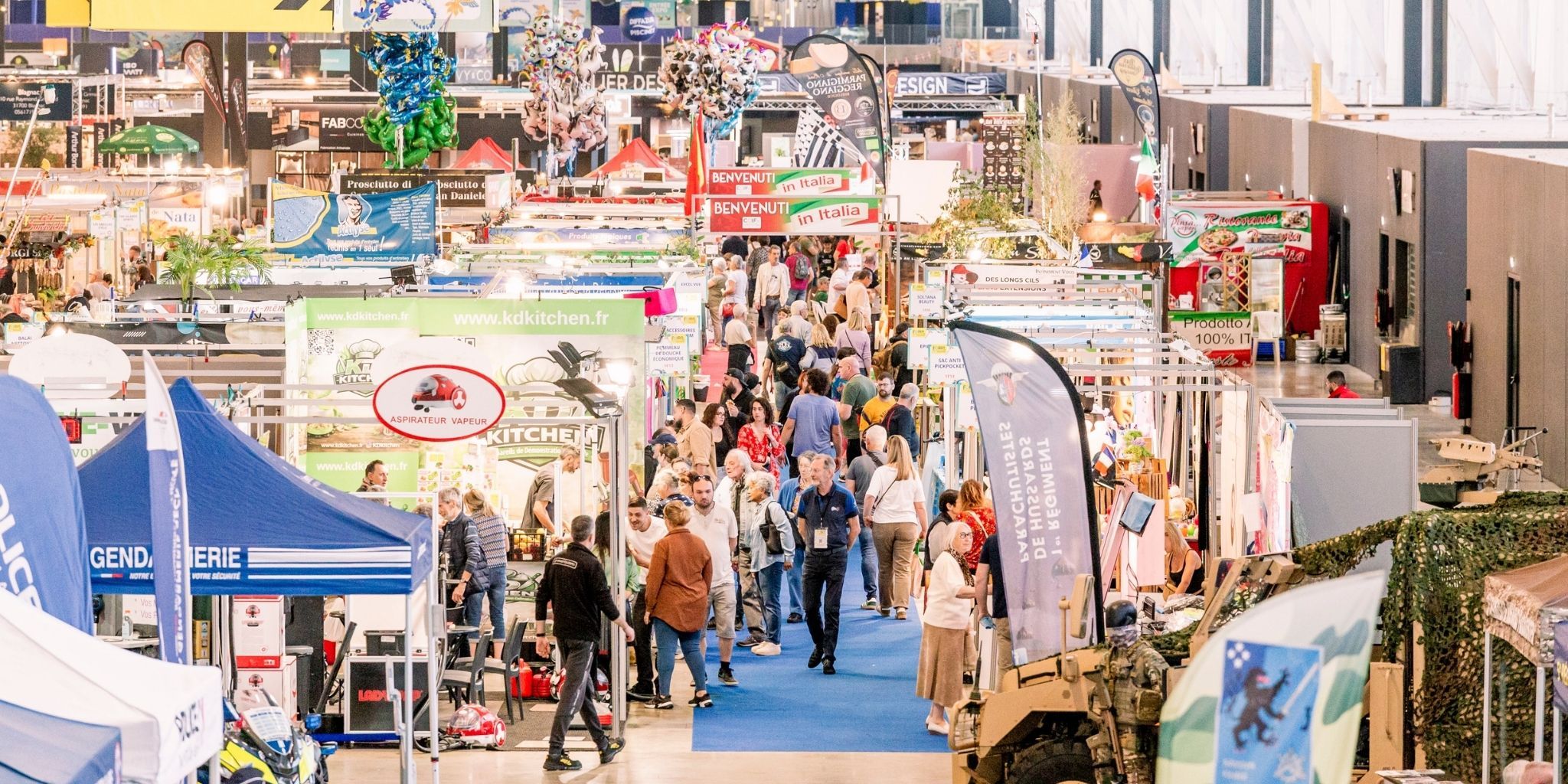
Fairs are much more than public events. They now create experiences designed to give visitors multiple reasons to come, stay and return. Business remains at the heart of the model, but it is now part of a broader programme combining discovery, leisure, gastronomy, culture and entertainment, with formats designed for different times of day and different ways of experiencing the fair.
In Strasbourg, the European Fair is once again adopting its “day and night” format. During the day, visitors can explore exhibitors, home improvement, crafts, food and shopping offers. In the evening, the atmosphere changes with free Foireurop’Live concerts, a food & drink village and entertainment running until midnight. In 2025, the event welcomed nearly 140,000 visitors, up 9% compared with 2024, with more than 550 exhibitors.
These evolving formats also respond to well-established visitor habits. In Strasbourg, 96% of visitors say they return from one year to the next, with an average visit lasting 5 hours and 35 minutes; 63% say they make a purchase during the Fair. These figures show that the event’s appeal is based both on its commercial dimension and on the experience offered throughout the day.
In Metz, this evolution can be seen both in the layout and in the visitor experience. The 2026 Fair has been redesigned, with a larger outdoor area, a new marquee dedicated to gastronomy and a new visitor entrance. It is also launching an app bringing together the floor plan, exhibitors, entertainment and notifications, along with visitor journeys tailored to different interests. This evolution builds on a strong commercial base: after more than 155,000 visits in 2025, nearly 80% of surveyed exhibitors said they intended to return in 2026.
How are fairs reaching all generations
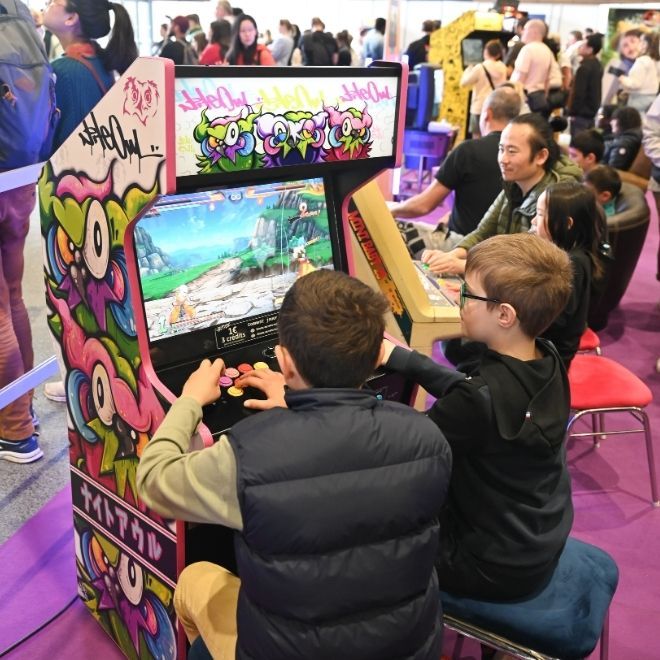
Continuing to bring people together also means evolving the offer to appeal to several generations within the same event. Fairs are therefore developing experiences aimed at families, children and young adults, while retaining the traditional areas that have built visitor loyalty. Gaming, sport, creative workshops and immersive experiences are creating new ways to discover the Fair.
In Strasbourg, the Strasbourg Esport Days are a particularly strong illustration of this evolution. For the first time, 2,900 sq. m will be dedicated over two days to gaming, esports and digital culture. Fortnite, Mario Kart, Valorant and Super Smash Bros competitions, meetings and entertainment are designed to bring together gamers, families and curious visitors. The Color Punk street art area complements this offer with a participatory artistic experience.
The European Fair is also developing discovery formats for younger visitors. The L’Outil en Main association, for example, invites 9- to 15-year-olds to discover manual and heritage trades, while workshops offer hands-on introductions to woodworking and arts and crafts.
In Caen, this approach takes the form of FIC’KIDS, an area entirely dedicated to children and families. Video games, board games, manga, creative activities, climbing, treetop courses, workshops and nature-related discoveries give younger visitors their own journey through the Fair.
In Saint-Étienne, the programme also spans generations. The first late-night opening combines a mini-disco for younger children, a family blind test and a musical programme, in a format specifically designed to bring children and adults together.
These initiatives reflect an important evolution in the format: the Fair remains a family event, but no longer treats families as a single, uniform audience. It multiplies experiences so that everyone can find something relevant to them and so that new opportunities for intergenerational sharing can emerge.
Why are immersive cultural experiences playing a growing role
Creating a sense of escape has become one of the ways of transforming a visit into a shared experience. In 2026, the five autumn fairs are making travel and cultural discovery a key part of their programmes. Exhibitions, scenography, gastronomy and artistic practices allow visitors to discover other places and enrich the experience beyond its purely commercial dimension.
In Strasbourg, an immersive scenographic exhibition highlights Southern Europe, while the street art area led by Marc Cronimus invites visitors to create their own artwork.
In Caen, Italy is in the spotlight with “The Mysteries of Pompeii”, an immersive exhibition inviting visitors to travel back to Antiquity and extend the experience through a programme inspired by Italian culture.
Saint-Étienne, meanwhile, is presenting “In Search of the Emerald Buddha”, an immersive experience dedicated to Thailand. Sets, heritage, traditions and entertainment create a journey designed as an invitation to travel.
In Metz, “Heading for the Pacific” combines the discovery of Polynesian cultures with awareness of their biodiversity. The journey includes an immersive tropical forest, a scenographic lagoon, content on Easter Island and an exhibition devoted to Polynesian fauna, flora and biodiversity, produced in partnership with Amnéville Zoo and Aquarium.
As the largest fair of the autumn season and the second-largest fair in France, the Marseille International Fair holds a special place in this series of events. Its scale and its strong roots in the city make it a particularly significant event for the region. Marseille is making its Mediterranean identity the central theme of the entire Fair. “The Mediterranean Takes the Stage” will unfold across the halls and esplanades through a dedicated route, a large immersive avenue, calligraphy, pottery and mosaic workshops, an area dedicated to the sea, virtual reality, a food court and a musical programme inspired by the cultures of Southern Europe and the Mediterranean.
How are fairs becoming more integrated into their cities and metropolitan areas
The Fair is no longer conceived solely within the walls of the exhibition centre. Its local roots also depend on the links built with local authorities, transport networks, economic stakeholders and cultural organisations. These collaborations help facilitate access to the event, encourage movement between the Fair and the city, and embed the event more deeply in the life of the city or metropolitan area.
In Strasbourg, this relationship is structural: Strasbourg events brings together the City of Strasbourg, the Eurometropolis and GL events. The Fair itself is developed with a broad ecosystem of local authorities, institutions, professional organisations and economic stakeholders. It also encourages access by public transport, train and bicycle.
In Caen, the Twisto transport network, Caen la mer’s mobility service, is a partner of the 2026 Fair. Visitors holding a Twisto ticket benefit from a reduced admission rate, while those arriving by bicycle can enter free of charge. This is a concrete way of connecting the event with metropolitan mobility.
In Saint-Étienne, the City and Saint-Étienne Métropole are directly represented at the Fair through an area dedicated to current and future mobility, combining an immersive journey, activities and discussions with professionals. Since 5 September 2026, the STAS network has also been free every Saturday throughout the metropolitan area, helping make access to the Parc Expo easier during the Fair’s weekends.
In Metz, this connection is expressed through both mobility and the promotion of the local area. Visitors presenting proof of public transport or taxi use can benefit from a reduced admission rate. The Eurometropolis is also represented in the programme through “A Treasure Trove of Heritage”, an exhibition dedicated to the historical, architectural, natural and cultural wealth of its 46 municipalities.
In Marseille, the connection with the city directly feeds into the 2026 theme. The “Views of My Mediterranean” competition invites Marseille residents to share their own perspective on the region; the ten selected photographs are then exhibited at the entrance to Parc Chanot before continuing their journey through the city. This openness also extends beyond the Fair itself with the Mediterranean Film Festival, organised in Pathé cinemas in Marseille and Plan-de-Campagne ahead of the event. It is another way of bringing the 2026 theme to life across the city even before the Fair opens.
These collaborations show that fairs are increasingly operating as events on the scale of their wider territories. They mobilise not only a venue, but also transport networks, institutions, cultural and economic stakeholders and, in some cases, local residents themselves. This openness helps give each edition an identity that is deeply connected to the city that hosts it.
The GL events autumn fairs calendar for 202
European Fair of Strasbourg 4 to 13 September 2026. Southern Europe, Foireurop’Live, street art, esports, gastronomy and new experiences will shape this 94th edition.
Caen International Fair 18 to 27 September 2026. Italy and the immersive exhibition “The Mysteries of Pompeii” will be the central theme of the edition.
Saint-Étienne Fair 18 to 28 September 2026. Thailand and the exhibition “In Search of the Emerald Buddha” will structure a programme focused on travel and discovery.
Marseille International Fair 25 September to 5 October 2026. The edition will put “The Mediterranean Takes the Stage” through a cultural, artistic, gastronomic and immersive programme.
Metz International Fair 25 September to 5 October 2026. Eleven days of the Fair, 550 stands, 25 business sectors and an immersive journey through the Pacific are planned.
Why do fairs remain popular events
Because they know how to combine what has historically made them successful with new uses and new audiences. Visitors still come to meet professionals, compare offers, discover products or move forward with a project. But they also come to attend concerts, play, create, learn, discover exhibitions, taste local specialities or simply spend time together.
The reinvention of fairs therefore does not mean breaking with their traditional model, but broadening it. Commercial, cultural, festive and multigenerational, they are also becoming more open to their urban environment and to the people and organisations that bring it to life.
In Strasbourg, Caen, Saint-Étienne, Marseille and Metz, the 2026 editions offer five different expressions of the same idea. They all share one principle: making the Fair a place where different generations, different uses and different communities can come together around a shared experience.
Also discover: “GL events Fairs: the fair experience at the service of local territories”
Which GL events fairs are taking place in France in autumn 2026?
The 2026 autumn season includes five major events: the European Fair of Strasbourg from 4 to 13 September, the Caen International Fair from 18 to 27 September, the Saint-Étienne Fair from 18 to 28 September, followed by the Marseille and Metz International Fairs from 25 September to 5 October.
How are fairs evolving today?
They are enriching their commercial role with immersive experiences, culture, gastronomy, gaming, workshops and festive programmes. These new formats make it possible to appeal to different generations and multiply the reasons to visit and return.
How are fairs attracting younger audiences?Gaming and esports, artistic activities, sports, participatory workshops and dedicated areas for children and families now complement the traditional offer. The aim is to provide each generation with experiences suited to their interests, while preserving the Fair’s collective and shared dimension.